
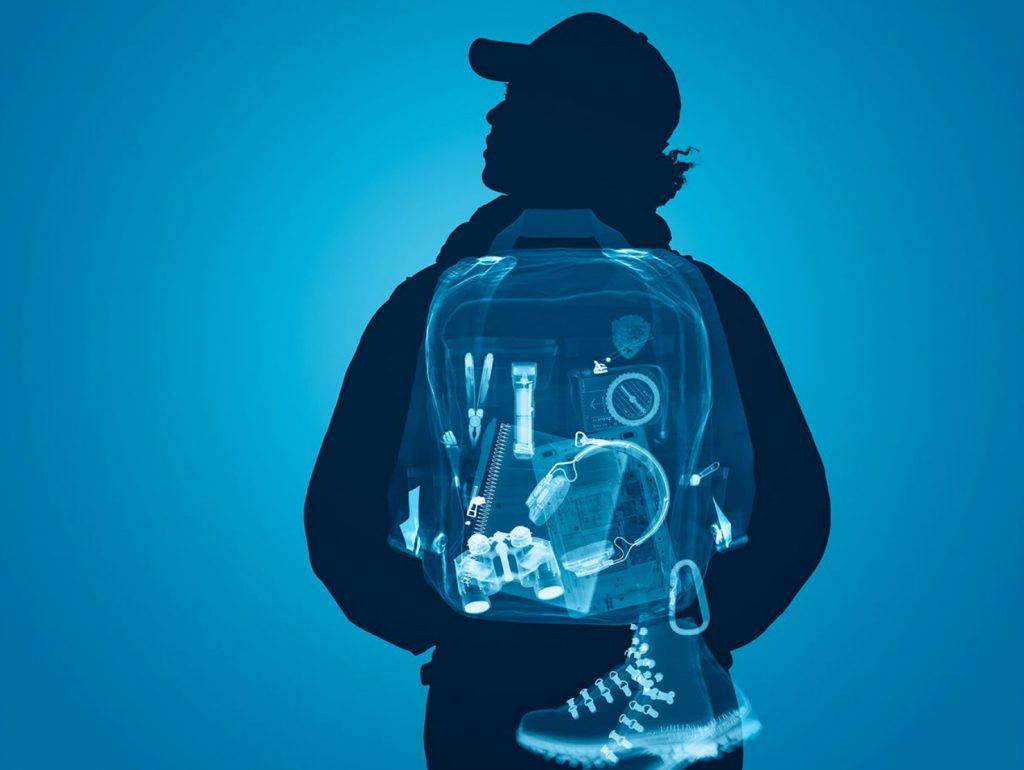
A suitcase moves along a conveyor belt.
A passenger steps through a gate.
A brief pause, a signal, and the journey continues.
Security scanning at airports and railway stations has become such a seamless part of travel that it often goes unnoticed. Yet, behind these routine moments lies a careful application of radiation and electromagnetic technology are designed not to alarm, but to protect.
How do these systems work without opening bags or stopping the flow of people?
What role does radiation play in this process?
And how is safety ensured for millions of travellers every day?
Why Scanning Is Essential in Modern Travel
Airports and railway stations are among the most complex public environments. Large crowds, constant movement, and time-sensitive operations leave little room for error. Ensuring that prohibited or dangerous items do not enter these spaces is a matter of public safety.
Traditional, manual inspection methods alone are no longer sufficient at this scale. Security scanning systems address this challenge by allowing authorities to screen people and belongings efficiently, consistently, and non-intrusively.
At the heart of this capability lies the controlled use of radiation and electromagnetic energy, applied in ways that are precise, limited, and strictly regulated.
Baggage Scanning: Seeing Without Opening
When luggage passes through a scanner, it is inspected using X-ray radiation, a form of ionising radiation commonly used in both medical and industrial applications.
How radiation is used
• A low-intensity X-ray beam passes through the bag.
• Different materials absorb X-rays differently based on density and composition.
• This interaction allows the system to distinguish between metals, liquids, and organic materials.
• A digital image is generated for trained security personnel to assess.
This use of radiation enables security teams to detect potential threats without physically opening bags or handling their contents.
Safety by design
The radiation dose used in baggage scanners is extremely low and fully contained within shielded equipment. There is no residual radiation, and personal belongings including electronics are unaffected.
Passenger Screening: Non-Ionising Technologies
Not all security scanning involves ionising radiation. In fact, much of passenger screening relies on non- ionising electromagnetic technology, which does not alter atoms or biological tissue.
Walk-through and hand-held detectors
These systems use low-strength electromagnetic fields to detect metallic objects. When metal disrupts the field, the system signals an alert. The energy levels involved are comparable to those encountered in everyday electronic devices.
Body scanning systems
In some airports, body scanners are used to detect concealed items that metal detectors may miss. Modern systems primarily use millimetre-wave radiation, a non-ionising form of radio-frequency energy.
These waves reflect off the body and any objects on its surface. Importantly, the system does not produce detailed images; instead, it highlights areas that may require further inspection, balancing security needs with passenger privacy.
Explosive Trace Detection and Complementary Methods
Security scanning is not limited to radiation-based systems alone. Explosive trace detection, for example, identifies microscopic residues of hazardous substances using chemical analysis rather than radiation.
Together, these technologies form a layered approach to security where each method supporting the other, reducing reliance on any single system.
Large-Scale Scanning: Cargo and Bulk Luggage
Beyond passenger checkpoints, airports and major railway stations also scan cargo, parcels, and bulk luggage. These systems may use higher-energy X-ray or computed tomography (CT) techniques to penetrate dense materials and identify concealed threats.
Here again, radiation is used responsibly:
• Equipment is heavily shielded
• Operators are positioned in protected areas
• Public exposure remains well below internationally accepted safety limits
Understanding Radiation in Context
Radiation is often associated with fear because it is invisible. In reality, it is a tool that can be harmful if misused, but invaluable when applied correctly.
In transport security, radiation technology is:
• Minimal in dose
• Precisely controlled
• Continuously monitored
• Regulated under international standards
Understanding this context helps build public trust and reinforces confidence in systems that operate quietly but effectively in the background.
Conclusion
Security scanning at airports and railway stations is a clear example of science serving society in subtle ways. Through the responsible use of radiation and electromagnetic technologies, these systems help prevent harm while allowing millions of journeys to proceed smoothly each day.
They are not designed to be noticed but only to work.
The next time you pass through a scanner or place your bag on a conveyor belt, you are witnessing applied science at its most practical: measured, regulated, and essential to modern mobility.
References
1. International Atomic Energy Agency (IAEA) — Radiation Protection and Safety in Security Screening
2. World Health Organization (WHO) — Ionizing and Non-Ionizing Radiation: Health Effects and Safety
3. International Commission on Radiological Protection (ICRP) — Principles of Radiation Protection
4. International Commission on Non-Ionizing Radiation Protection (ICNIRP) — Guidelines for Limiting Exposure to Electromagnetic Fields
5. U.S. Food and Drug Administration (FDA) — Radiation-Emitting Products: Security Screening Systems
6. Health Physics Society — Radiation Exposure from Airport Security Screening
7. UNSCEAR — Sources and Effects of Ionizing Radiation